



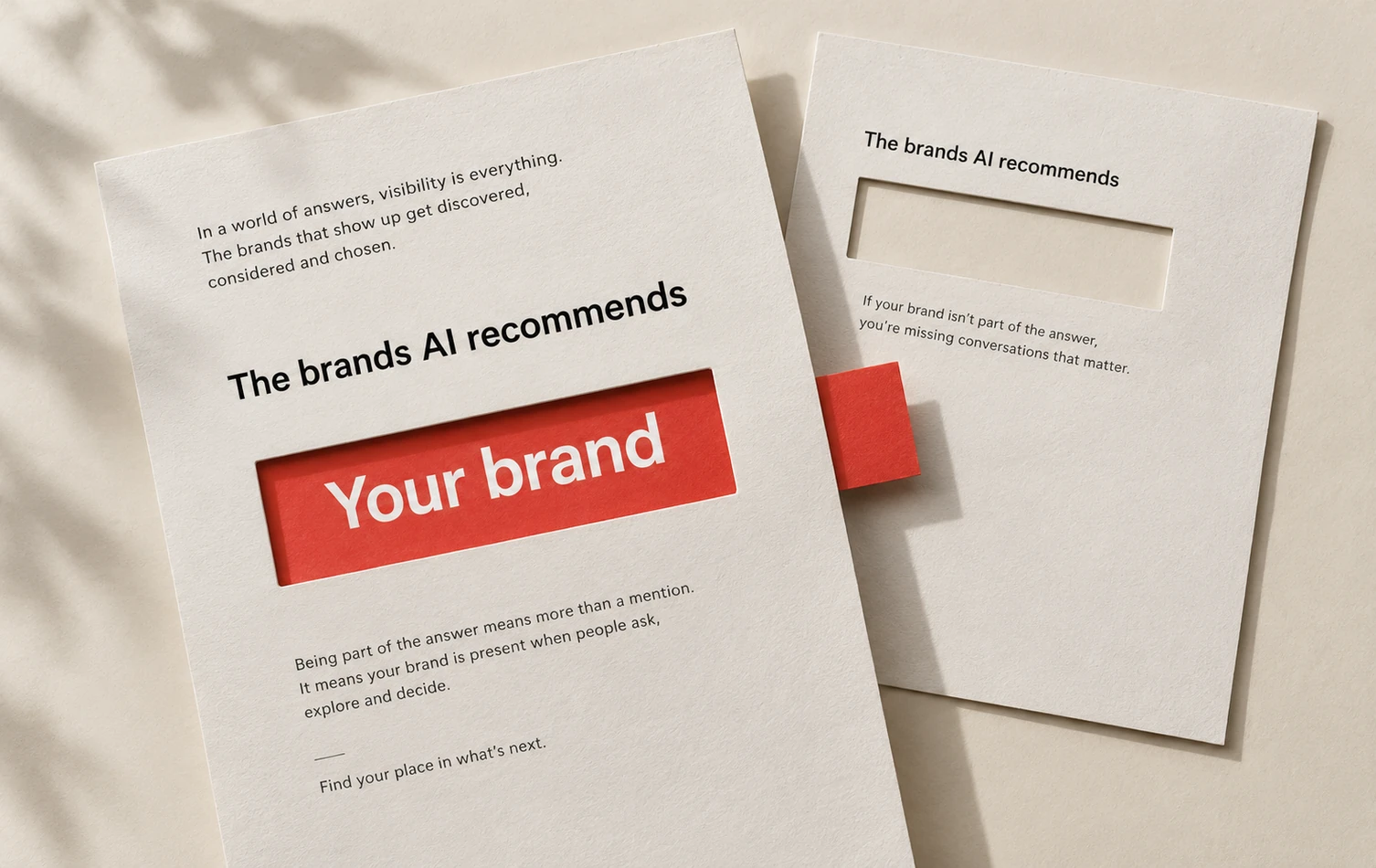
When someone asks AI for a recommendation in your category, is your brand part of the answer? Get Nodded helps you explore the questions, responses, and sources behind those recommendations, so you can see where you’re being discovered and what deserves your attention next.
Start with the questions your buyers ask
Begin with the conversations you already hear in sales calls, support tickets, and customer research. What are people trying to solve? Which alternatives do they compare? What would make them choose one product over another? Turn those questions into the prompts you track.
Include questions that do not name your brand. A prompt that already mentions you can tell you how AI describes your business; an open question can help you understand whether it discovers you at all. For an AI visibility product, a starting set might include:
“Which tools help a small team track brand mentions in AI answers?”
“What should I look for in an AI visibility platform?”
“How can I find the sources behind an AI recommendation?”
Read the answer behind the mention
A brand name in an answer is only the beginning. Read the surrounding response to understand its role. Is your product recommended for the buyer’s needs, included as an alternative, or mentioned without any explanation? Does the answer describe what you actually offer?
Use Get Nodded’s tracked responses to review that context across AI engines. Keep the prompt and engine in view as you read: being recommended for one question does not mean you will appear in every conversation about your category.
Find the conversations you’re missing
Look at the questions where another brand appears and yours does not. These are useful starting points for investigation. Read what the answer values about the recommended product, then compare it with the information available about your own.
Focus on gaps that matter to your audience. If a competitor is recommended for straightforward setup, for example, check whether your own setup guide explains the process clearly. If an answer overlooks a feature you offer, make that feature easy to find and understand on the relevant product page.
Treat each missing mention as a question to investigate. It is not proof that one competitor page caused the result, or that a particular edit will change the next answer.
Follow the sources behind the answer
When a tracked answer includes citations, open the sources and read them. A product page, an independent review, and a community discussion can each add a different perspective. Notice which details they explain and whether those details are accurate and current.
Use Get Nodded’s citation view to explore those pages and domains. A source that appears repeatedly in your tracked answers may be worth closer attention, but a citation is a clue to the response, not a complete explanation of how the AI produced it.
Check whether your own cited pages describe the product clearly.
Look for outdated or missing details on relevant listings and reviews.
Identify questions that existing articles leave unanswered.
Turn one gap into a useful piece of content
Choose a question you can answer well. That might call for a practical comparison, a detailed setup guide, a clearer feature page, or an explanation of who your product is designed for. Start with the reader’s decision and include the details they need to make it.
Use competitor content to understand what buyers are being shown, then contribute your own experience and evidence. Explain the tradeoffs honestly, support factual claims with appropriate sources, and give readers something more useful than a rewritten version of another article.
For example, a buyer asking about tools for a small team may need to understand setup effort, collaboration, and reporting. An article that addresses those questions directly gives them a clearer basis for choosing.
Keep the questions consistent as you improve
Return to the same prompts after making changes. Compare the wording of the responses, the brands they mention, and the sources they cite. Keep a note of what you published or updated so you have context for what you see later.
AI answers can vary between runs and engines. Look for recurring patterns across the responses you track, and use those observations to decide what to investigate next. Visibility work is an ongoing process of listening, improving, and checking again.
Take your first look with Get Nodded
Start with the questions your customers ask. Read where your brand appears, follow the cited sources, and choose one gap you can address. Get Nodded brings those observations together so your next piece of work has a clear purpose.
Explore AI visibility tracking or take the product tour to see how it works.
See what AI says about you