GEO for leaders: why executives should care about AI search and what to ask your team for

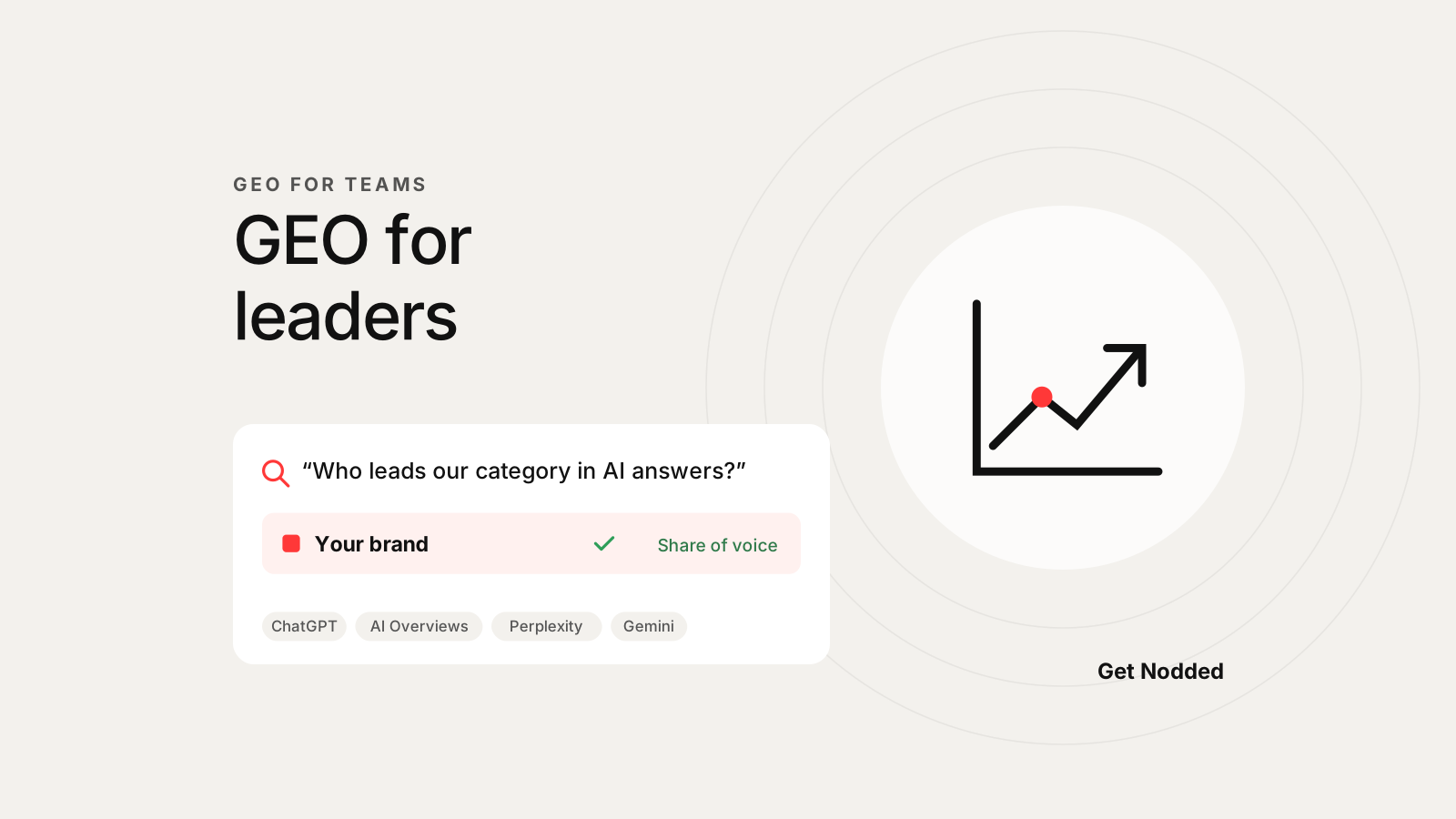
Your customers are asking ChatGPT and Google's AI answers which company to choose. Those answers name a few brands and explain why. As a leader, you don't need to run GEO yourself, but you do need to know whether your company is in those answers, how it's described and what the team is doing about it.
Why AI search is a leadership issue
AI answers shape the shortlist before a buyer talks to sales. They also shape reputation: an engine that repeats an old complaint or a competitor's framing influences everyone who asks. That makes AI visibility a brand, revenue and risk question, not just a marketing tactic.
It's also early. Many companies aren't measuring it yet, which leaves room to build an advantage before your category catches up.
The metrics to ask for
Ask your team for a short, consistent set of numbers, tracked over time.
| Metric | Why it matters |
|---|---|
| Visibility by engine | Shows how often you appear in answers on ChatGPT, Google AI Overviews and others |
| Share of voice vs competitors | Shows whether you're gaining or losing ground in your category |
| Sentiment | Shows whether answers describe you favorably or repeat negatives |
| Top cited sources | Shows which publications, review sites and communities shape your story |
| Accuracy issues found and fixed | Shows whether wrong or outdated claims are being corrected |
| AI crawler access | Confirms your own site isn't blocking the engines you want to be in |
Questions to ask your team
These five questions tell you quickly whether the program is real or just a dashboard.
Which buyer questions are we tracking, and who chose them?
Where are we missing, and which competitors are recommended instead?
What do the answers actually say about us, word for word?
Are any AI crawlers blocked by our site, CDN or firewall, and is that intentional?
What did we change last month, and did it move anything?
Board-level reporting
Keep it to one slide each quarter: share of voice against your top competitors, the trend in visibility and sentiment, two or three example answers quoted word for word, and the actions planned. Avoid vanity numbers. A board needs to know whether the company is winning the conversation in its category and whether the team has a plan.
Budgeting for GEO
Most of the cost is people and content, not tooling. Budget for a clear owner, content production, PR and community work to earn citations, and some web engineering time for crawler access and rendering. Tracking tools are a small line item by comparison.
Give the program at least a quarter before judging it, and judge it on trends rather than individual answers, which vary between runs.
Why Get Nodded for leaders
Leaders need a trustworthy answer to one question: are we winning the AI conversation in our category, and is the team doing something about it? That needs the same numbers every quarter, real answers you can read yourself, and a clear line from findings to actions, without learning a new tool.
Get Nodded gives your team every metric in the table above in one place, and gives you a read-only link to check progress. Because it also produces the work (articles, link targets, technical fixes), you can see whether the budget is going into changes that move the numbers.
| Challenge | How Get Nodded helps |
|---|---|
| You don't know if the company appears in AI answers at all | Visibility score per engine over time across ChatGPT, Google AI Overviews, Google AI Mode, Perplexity, Gemini and Copilot |
| You need to know if you're gaining or losing to competitors | Share of voice against competitors, including rivals the engines recommend that you weren't tracking |
| Reputation risk from negative or outdated answers | Daily sentiment scores from 0 to 100, plus the full responses word for word |
| No visibility into what shapes the company's story | Every citation listed and classified, so you can see which publications and review sites matter |
| You want progress updates without another login | Shareable read-only report links that open in any browser |
| Unclear whether spend is turning into action | AI Content, Reddit & Backlinks and the AI readiness audit turn gaps into articles, link targets and technical fixes you can track |
Your first 30 days with Get Nodded
Week 1: Name one owner. Ask them to load 50 to 100 prompts that reflect how your buyers choose, plus your top three to five competitors.
Week 2: Read the full responses for your five most important prompts yourself. Flag anything inaccurate, outdated or framed by a competitor.
Week 3: Ask for the baseline: visibility by engine, share of voice, sentiment and top cited sources, shared as a read-only link.
Week 4: Agree three priorities from the data (for example, one content gap, one citation target and one technical fix), each with an owner, and set the quarterly review date.
Which plan fits
For a single-brand company, Pro at $299 a month gives you what a leadership view needs: all six engines, 100 prompts, two checks a day and room for a second brand. For a group with several brands, business units or regions, Business at $699 covers five brands, 150 prompts and four checks a day.
Larger organizations that need more brands or prompts should talk to us. Either way, the tool costs far less than the content and people behind the program, and yearly billing takes 10% off.
Frequently asked questions
Is GEO a replacement for SEO spend?
No. AI engines retrieve from search indexes, so SEO remains the foundation. GEO adds measurement of AI answers and work on the sources those engines cite.
How do we know if GEO is working?
Look for rising visibility and share of voice on the prompts you track, improving sentiment, and more citations from sources you targeted, measured over weeks and months.
Why use Get Nodded for leaders?
It gives your team the metrics that matter, visibility, share of voice, sentiment and citations across six AI engines, and gives you a read-only link to check them. It also produces the work that moves those numbers, so you can see spend turning into results.
More in Teams
GEO for marketing teams: how to win AI search in ChatGPT, Perplexity and Google AI Overviews
GEO for operations teams: how to run AI search optimization as a repeatable process